


How to wash your car at home without scratching the paint
Most fine scratches in paintwork don't come from accidents. They come from washing itself: the wrong sponge, dirty water, mid-afternoon sun. This guide is the method for washing without leaving marks, using what fits on a balcony or in a shared garage.
You don't need a pressure washer or studio products. You need two buckets and half an hour.
What you'll use
| Item | What for |
|---|---|
| 2 buckets | one with shampoo, the other with plain water. That's the whole trick: the dirt stays in the second bucket and doesn't go back onto the paint. |
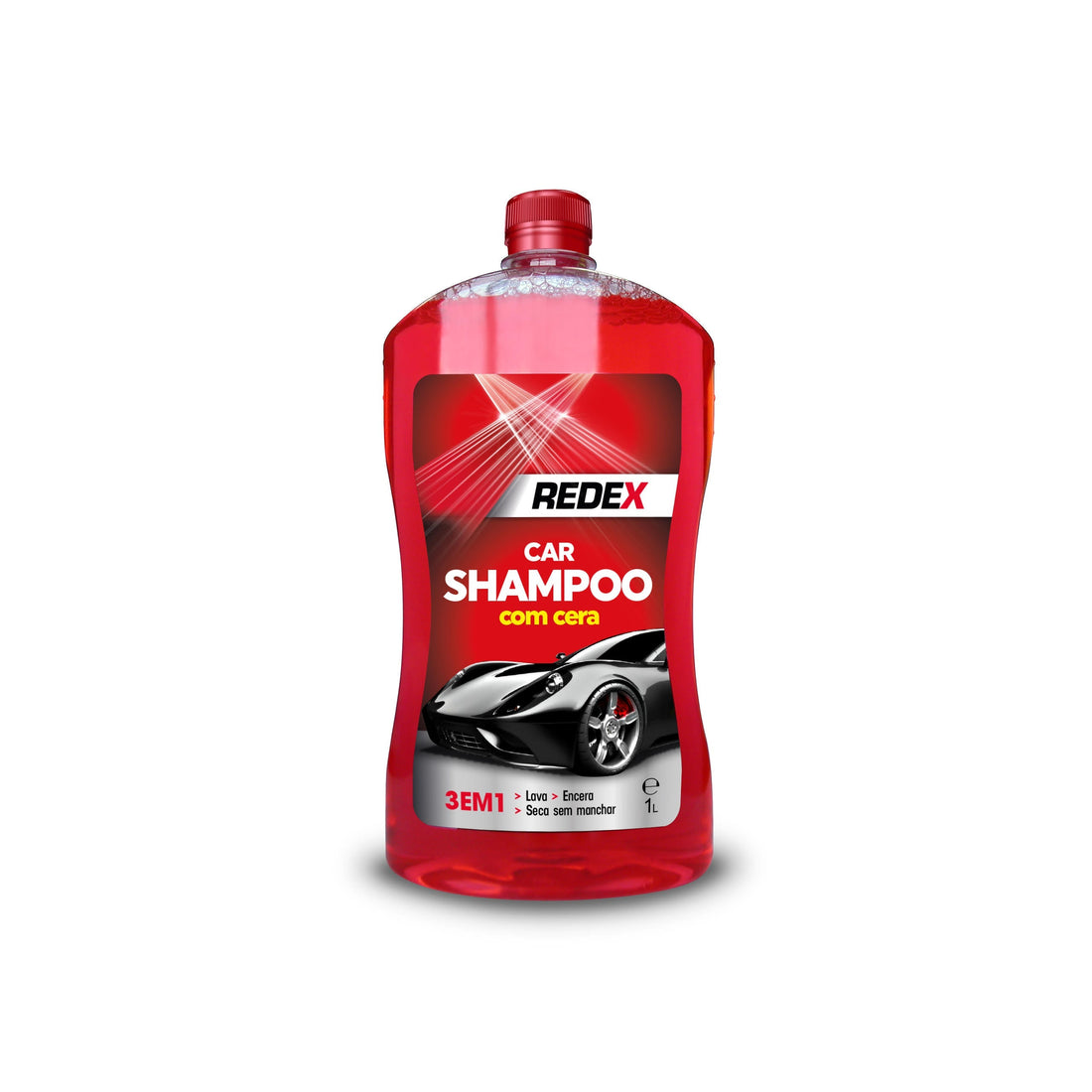
| Redex Car Shampoo 1 L (€2.99) | loosens dirt without stripping protection. Also available in 2 L and 5 L if you wash often. |
| Wash Mitt Noodle 2-in-1 (€5.99) | replaces the sponge. A sponge drags grit across the paint; the mitt traps it in its fibres. |
| Drying and Polishing Towel (€4.99) | dries without rubbing or leaving water marks. |
| Glass Cleaner 1 L (€1.99) | glass goes last. |
Washing-up liquid stays in the kitchen. Yes, it cuts grease, and that's exactly why it takes the wax and paint protection with it.

The method, step by step
1. Choose the time, not just the place
Shade and cool panels, ideally in the morning or late in the day. With the sun on the bodywork, water and shampoo dry before you can rinse them off, and that's how limescale spots form.
2. Always rinse first
Before you touch the car, rinse it thoroughly from top to bottom. Everything that comes off now is grit you won't be rubbing into the paint later.
3. Two buckets, one rule
Bucket A: water and shampoo. Bucket B: clean water only. Dip the mitt in A, wash one panel, rinse the mitt in B to release the dirt, then go back to A. It seems excessive until you see the colour of the water in bucket B at the end.
4. Top to bottom
Roof, glass, bonnet, doors, and only at the end the lower sections and the wheels. The bottom of the car is always the dirtiest; if you start there, you spread that dirt upwards.
5. Don't let it air-dry
Rinse everything and dry straight away, laying the microfibre towel flat and drawing it across without pressure. Air-drying leaves water marks, especially on dark cars.
6. Glass last
Glass Cleaner and a dry microfibre cloth, in crossed strokes: horizontal outside, vertical inside. That way, if a streak remains, you know straight away which side it's on.
7. Tyres and plastics, if you want to go further
Once the wash is done, Redex Tyre Shine (€7.99) leaves the rubber dark without the oily film that attracts dust. It's the difference between a washed car and a finished one.
The 3 mistakes that undo your work
- Washing in the sun. Spots guaranteed, even with the right product.
- One sponge for everything. A sponge that has been on the wheels never goes back on the paint. Ever.
- Automatic brush washes as a routine. A €2 automatic car wash will do in an emergency, but the brushes hold the grit from every car that went through before yours.
Frequently asked questions
Can I use washing-up liquid?
No. It cleans, but it strips the wax and paint protection and dries out rubber and plastics. A car shampoo costs €2.99 and lasts for many washes.
How often should I wash my car?
In general, every two to four weeks. If your car is parked outside under trees or near the sea, shorten the interval: sap, bird droppings and salt air damage the paint if they're left there for weeks.
I don't have a hose. Can I still wash it?
Yes, with more care: still two buckets, more water for rinsing using a watering can or sprayer, and small panels at a time. It takes longer. What you must not do is rub dry paintwork.
Does washing remove existing scratches?
No. Washing properly prevents new scratches; to reduce the ones already there, the answer is polishing. We explain when it works and when it's not worth it in our guide to fine scratches.
Redex is developed and filled by Plurifil in Rio de Mouro, Sintra, Portugal. Online shop prices as of 12 July 2026.


