


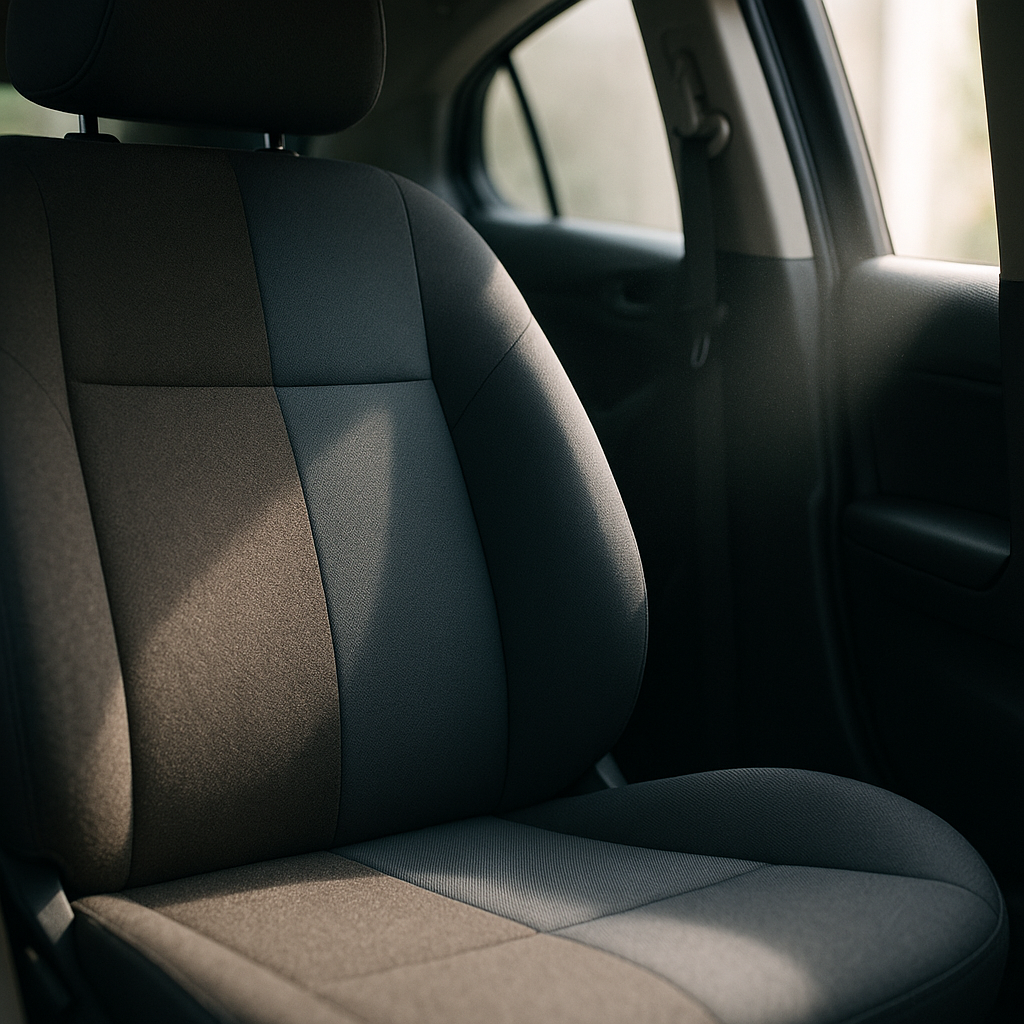
How to clean car upholstery (fabric and leather)
Vacuum thoroughly, work in small sections, use one product made for fabric and another for leather, avoid soaking, dry with ventilation and finish with an odour neutraliser. Follow CLP/GHS safety throughout.
Introduction
Clean upholstery transforms a car's interior and keeps odours away. The secret isn't “soak and scrub”, but controlling moisture, choosing the right product for each material and drying properly. Follow the professional process below - simple, safe and effective.
The essentials
- Identify the material: fabric, leather, Alcantara/faux leather.
- Golden rule: less water, more precision. Work in small sections.
- Basic tools: vacuum cleaner, soft brush, microfibre cloths, two buckets (clean/dirty), spray bottle, odour neutraliser.
- Compatibility test: apply the product to a hidden area and watch for 2-3 min.
- Environment: shade and good ventilation; protect plastics and electronics.
Step by step
1) Preparation and vacuuming
- Remove car mats and loose items.
- Vacuum joints, seams and under the seats. The less dust there is, the less “mud” you make when cleaning.
2) Stain pre-treatment (fabric)
- Spray Upholstery Cleaner directly onto the stain. It penetrates the fibres and removes dirt, stains and odours.
- Work it in with a soft brush using short, circular movements.
- Respect the dwell time on the label and remove with a damp microfibre cloth (without soaking).
3) General cleaning (fabric)
- Lightly spray the section (30×30 cm).
- Brush gently and wipe with microfibre to lift the dirt. If you prefer everything in one product, the Upholstery Cleaner with Brush comes with the brush built into the pack.
- Repeat if necessary. Avoid saturating the seat foam.
4) Leather
- Use a dedicated leather cleaner such as Upholstery Cream, applied to the cloth (not directly onto the seat).
- Gentle movements; the final finish should be satin (shiny leather = dirty leather).
- Condition if the product says so. Upholstery Cream, for example, also helps prevent cracking and wear of the leather over time.
5) Drying and odour control
- Wipe with a dry microfibre cloth for the final pass.
- Open the windows/doors; use a fan or a wet-dry extractor (if you have one) to speed things up.
- Finish with an odour neutraliser (not a “masker”) and let it work.
6) Headlining (roof lining)
- Sensitive area: work almost dry. Spray onto the cloth, never onto the headlining.
- Minimal pressure, and support it with your other hand so the lining doesn't come unstuck.
Common mistakes (and how to avoid them)
- Soaking fabric seats → mould/smell: use a light spray and active drying.
- Using harsh household degreasers → fading/stiffness: use suitable car products.
- Too much friction → raises the pile/“burns” the fabric: soft brush, dwell time.
- Applying directly to leather → marks: apply to the cloth, in small amounts.
- Skipping the test → localised damage. A quick test avoids it.
- Using the dashboard product on upholstery → it won't clean fabric or leather properly: Detailer Interior is made for plastic, vinyl and rubber (dashboard, console, doors). For upholstery, use Upholstery Cleaner or Upholstery Cream.
Recommended products (Plurifil)
- Upholstery Cleaner: removes dirt, stains and odours from fabrics and upholstery; penetrates the fibres.
- Upholstery Cream: cleans and protects fabric, leather or synthetic; conditions and helps prevent cracking.
- Upholstery Cleaner with Brush: spray and built-in brush in one product, for seats, car mats and upholstery in general.
- Upholstery Brush: a standalone brush for those who already have the cleaner and just need the tool.
- Odour Eliminator: neutralises smoke, food and mould odours in the cabin.
- Interior Cleaning Collection: the full range for cleaning and caring for your interior.
CLP/GHS safety: wear gloves and work in a ventilated area. Never mix incompatible chemicals. Test on an inconspicuous area. Always follow the label and read the product SDS before use.
Frequently Asked Questions (FAQ)
Can I use laundry detergent on upholstery?
We don't recommend it: too much foam makes rinsing difficult and can leave residue and smells. Choose products made for car fabric.
How wet should I get the seats?
As little as possible. A light spray, working in sections and active drying with microfibre/ventilation.
How do I remove grease stains?
Pre-treat with upholstery cleaner, give it dwell time and remove with microfibre. Avoid harsh household solvents.
What if the smell comes back the next day?
It means moisture is trapped. Repeat the drying (ventilation/extractor) and use an odour neutraliser.
Can I use the same product on leather?
No. Leather needs its own cleaner, such as Upholstery Cream, made for fabric, leather and synthetic, followed (if applicable) by light conditioning.
How do I clean the headlining without it coming unstuck?
Product on the cloth (almost dry), light touches, without wetting or pulling the lining.
How often should I clean?
Vacuum fortnightly; light clean monthly; deep clean when needed or after spills.
Do I need an extractor?
It helps with deep drying and removing residue from fabric, but it isn't essential for regular maintenance.
Can I use Detailer Interior (the dashboard one) on upholstery?
No. Detailer Interior is made for the plastic, vinyl and rubber in the cabin (dashboard, console, doors), not for fabric or leather. For upholstery, use Upholstery Cleaner or Upholstery Cream.


