


How to clean your car engine at home, safely
Cleaning your car engine takes just a few stages: protect the sensitive areas, apply a degreaser such as Redex Engine Cleaner, leave it to work for a few minutes, then rinse or wipe it off with a cloth, depending on the method you choose. The engine must be cold before you start. To finish, an engine paraffin such as Redex Engine Paraffin gives the outside of the engine bay a more even finish. It isn't a complicated job, but it does call for care around the electronics.
Before you start
The engine must be cold. Cold water on a hot engine can crack parts and the risk of burns is real, so wait at least half an hour after switching the car off.
- Disconnect the battery or, at the very least, cover the terminals with a plastic bag.
- Protect the air intake, the alternator, the fuse box and any exposed connectors with plastic bags and tape.
- Work outdoors or in a well-ventilated space, as degreaser fumes are unpleasant in an enclosed area.
- If you're using water, choose a gentle, controlled spray over a pressure washer aimed straight at the engine.
This applies to any engine clean, whatever product you use.
Step by step: how to clean your car engine
1. Vacuum or blow away loose dirt
Before any product goes on, remove leaves, dried soil and debris with a vacuum cleaner or compressed air. That way the heavy dirt doesn't turn into mud when the engine gets wet.
2. Spray on the degreaser
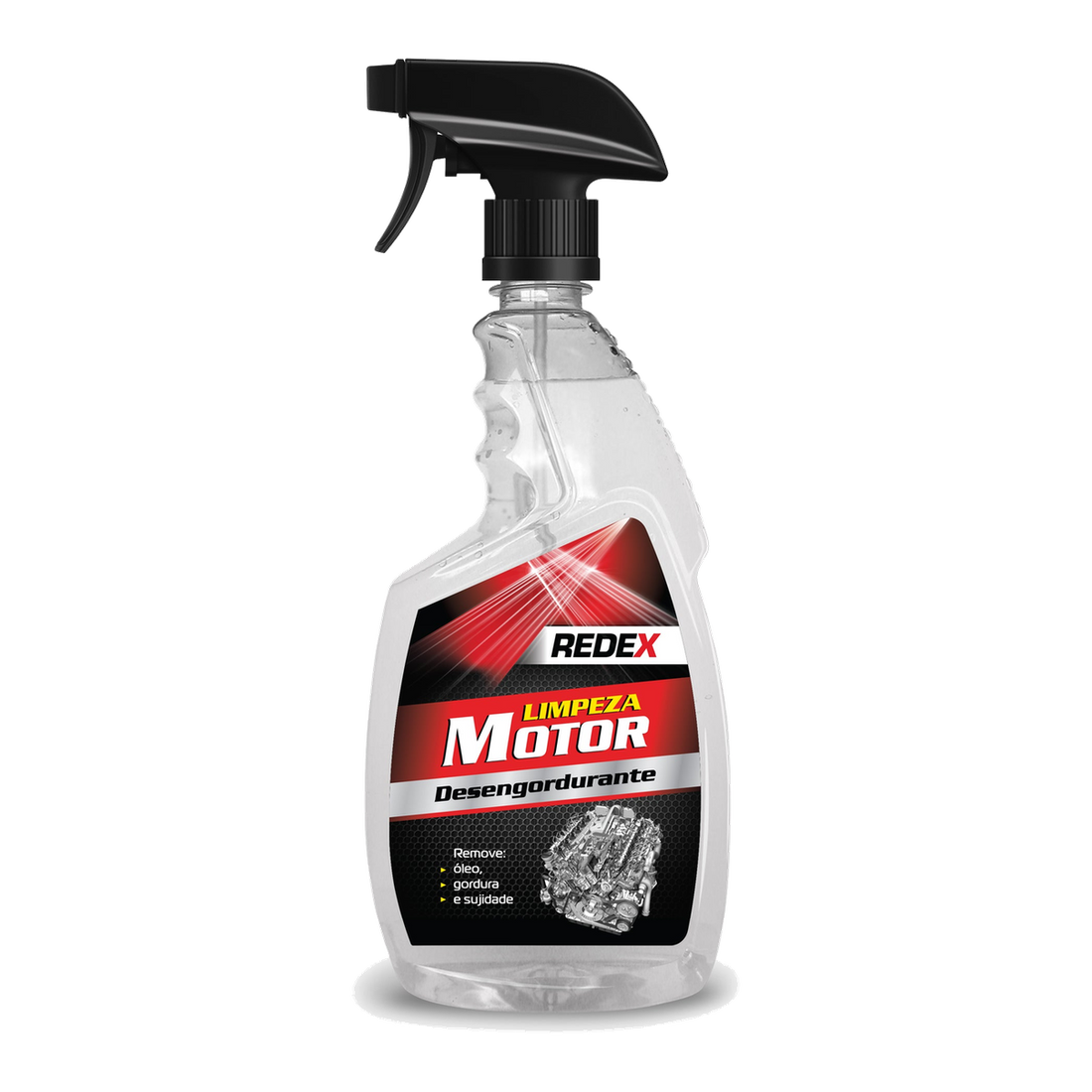
Apply Redex Engine Cleaner to areas with oil, grease and built-up grime: the rocker cover, pipes and hoses, the air filter housing. Cover them well, without overdoing it near electrical connectors.
3. Leave it to work
Give the product a few minutes to soften the grease before you touch it. Don't let it dry on the engine in the sun.
4. Scrub where needed
Areas with older grease usually need a soft-bristled brush or a cloth. Avoid abrasive sponges on plastics and painted parts.
5. Rinse or wipe off, depending on the method
With water, use a gentle spray from top to bottom and avoid aiming straight at connectors. Dry, wipe away the product and dirt with microfibre cloths until no more residue comes off.
6. Dry thoroughly before closing the bonnet
Use compressed air or let the engine bay air out with the bonnet open. It's moisture trapped in the connectors that tends to cause electrical problems later, not the washing itself.
Dry cleaning vs. cleaning with water
Water is the most common method: spray on, leave to work and rinse off — the application Redex Engine Cleaner is designed for. It removes more dirt in less time, but calls for more care in protecting the electronics.
Dry cleaning suits anyone who would rather keep water away from the engine, or a quick touch-up between full cleans. Apply the product, leave it to work and wipe everything off with cloths, without rinsing. It's more work on a very dirty engine, but less worrying on a modern engine packed with sensors.
Neither method is right for every case. The choice depends on the state of the engine and what you feel comfortable doing near the electronics.
Which product to use
For the dirt itself (built-up oil and grease), use a degreaser such as Redex Engine Cleaner, available in 400 ml and 500 ml. Spray on, leave to work and rinse: that's the method given on the product.
Redex Engine Paraffin takes care of the outside of the engine bay: plastics and visible components. It removes dirt and light grease and gives a more even look, but it doesn't replace the degreaser on heavier build-up. It also helps reduce how much dust and moisture stick. The product sheet says to avoid hot areas and exposed electrical parts.
You don't need both products for a quick clean. If you just want to remove the worst before an inspection or selling the car, the degreaser alone already transforms the look. The paraffin is the extra step that keeps that look for longer.
Mistakes to avoid
- Cleaning while the engine is hot or still running.
- Aiming the hose or pressure washer straight at connectors and the fuse box.
- Letting the degreaser dry in the sun before removing it.
- Closing the bonnet while the engine bay is still damp.
- Using washing-up liquid or household cleaners instead of a degreaser made for engines.
Frequently asked questions
Is it safe to wash a car engine with water?
Yes, it's the most common way to do it, as long as the engine is cold and you protect the battery, alternator and fuse box before you start. Use a gentle water spray rather than a direct high-pressure jet. The risk isn't the water itself, it's where you aim it.
Can I clean the engine dry, without water?
Yes. Apply the degreaser, leave it to work and wipe everything off with microfibre cloths instead of rinsing. It's slower on a very dirty engine, but it completely avoids the risk of water near electrical parts.
What product should I use to clean my car engine?
A degreaser made for the job, such as Redex Engine Cleaner (400 ml or 500 ml): spray on, leave to work and rinse off. For the outer finish once it's clean, Redex Engine Paraffin helps even out the look and reduces how much dust and moisture stick.
How often should I clean my car engine?
There's no fixed rule. Most people who look after their car clean the engine bay once or twice a year, or whenever there's visible build-up of grease and dust. An engine with oil leaks gets dirty faster and may need more frequent cleaning.
Can Engine Paraffin be used on the engine's electrical parts?
No. The product sheet says to avoid hot areas and exposed electrical parts — use it only on the outside of the engine bay, on plastics and visible components, after cleaning.


